IPTV Explained: How It Works, Benefits and How to Choose
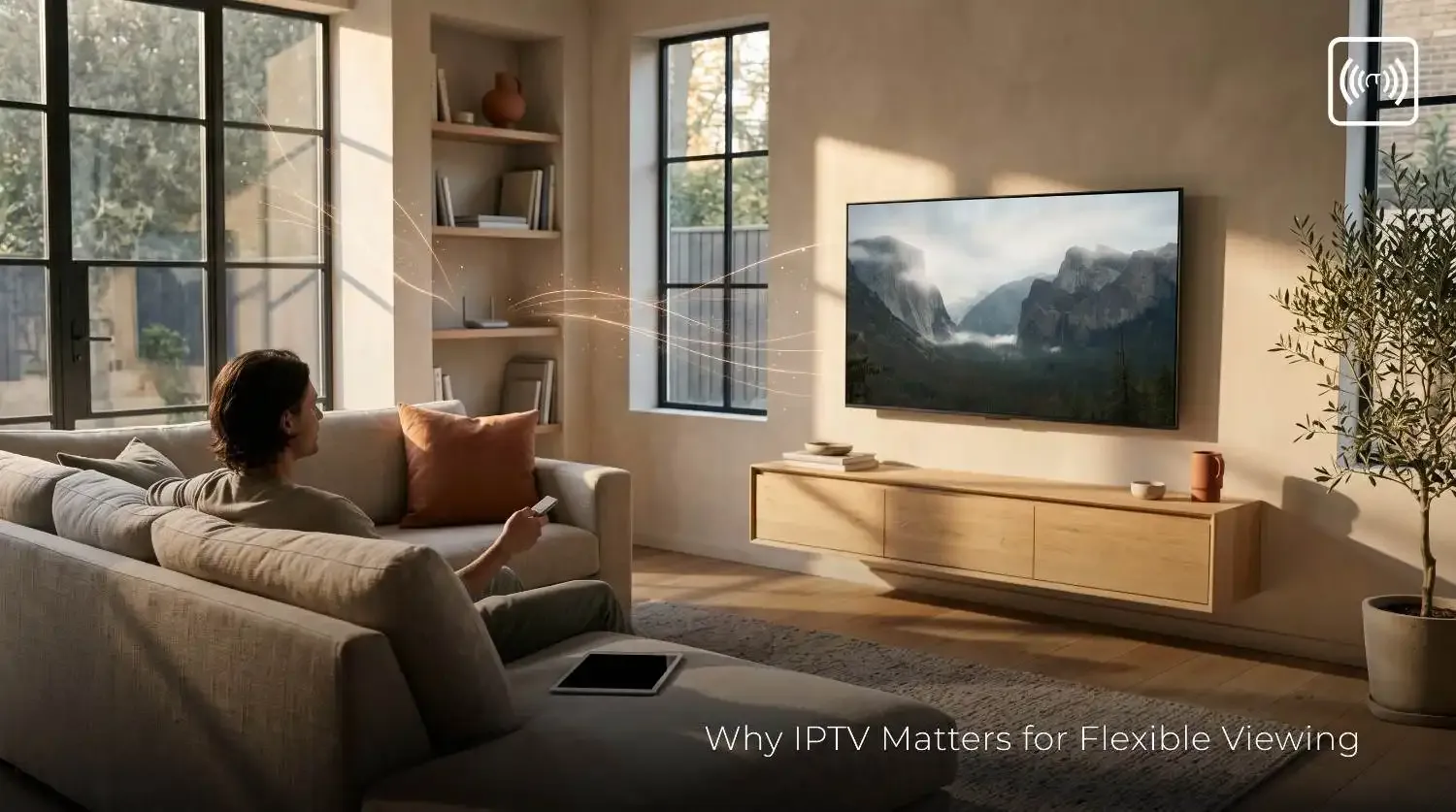
Why IPTV Matters for Flexible Viewing
Most people want television that fits around their lives. They want to watch on a living-room TV, a tablet or a phone, pause a program and pick it up later, and browse a clear program guide instead of flipping through dozens of channels. That expectation is a big reason IPTV has become a common term in home entertainment. Yet the acronym is often used loosely, and it is easy to confuse the technology with the services that deliver content over it.
This article explains what IPTV is, how the delivery process works, and where it differs from cable and satellite television. It also covers the practical questions readers ask before choosing a provider, including device compatibility, internet speed, troubleshooting, and whether a service is legitimate. The aim is clarity rather than hype. IPTV is a useful technology, but its quality and value depend on the provider, the network, and the content rights behind each service.
What Is IPTV?
IPTV stands for Internet Protocol Television. It is a way of delivering television content over networks that use the Internet Protocol, the same Internet Protocol, addressing and packet-based system that carries web pages, email and video calls. Instead of arriving over a dedicated cable or radio-frequency signal, television programming is split into data packets and sent across an IP network to a receiving device.
IPTV supports several viewing modes. Live television is streamed in near real time, so viewers watch channels as they are broadcast. Time-shifted viewing lets people watch a program after it airs, where the provider and the content rights allow it. Video-on-demand (VOD) gives access to a library of titles that the viewer can start at any time.
It is important to understand that IPTV describes how content is delivered. It does not indicate whether a service is licensed or lawful. A legitimate broadcaster and an unauthorized operator can both use IP delivery. Evaluating the service behind the technology is therefore a separate and necessary step.
How Does IPTV Work?
Although the experience looks simple on screen, IPTV involves several stages.
- Content acquisition and licensing. A provider obtains the rights to distribute channels, shows or films. This is the most important step legally, because the rights determine what can be offered and where.
- Encoding and packaging. Video is compressed with codecs such as H.264 or H.265 and divided into segments. Packaging adds metadata, such as the electronic program guide (EPG) that displays schedules and program descriptions.
- Content distribution. Encoded streams are moved to servers and often stored across a content delivery network (CDN). A CDN places copies of content closer to viewers, which can reduce delay and spread demand across many servers.
- Delivery over an internet connection. The viewer's device requests the stream and receives segments over the home or business internet connection.
- Playback. A compatible application, smart TV, set-top box or streaming device decodes the video and displays it.
Several technical factors affect the result. Bandwidth is the capacity of the connection, and congestion occurs when many devices share it. Latency is the delay between a request and the start of playback, and it matters most for live sports and news. Device performance affects decoding and display. Many services use adaptive bitrate streaming, which measures the connection in real time and switches between lower and higher quality versions of the same video. This reduces buffering when a network slows (one widely used example is the HTTP Live Streaming specification), though picture quality may dip for a time.
Key Benefits of IPTV
IPTV can offer several practical advantages. Viewers can often watch on multiple compatible devices, including smart TVs, phones, tablets and computers. Many services combine live channels with on-demand libraries. Interactive program guides make it easier to search by genre, schedule or title. Because the technology is software-based, providers can add features and integrate with connected-home platforms more readily than some traditional systems allow.
Subscription options also vary. Some providers offer monthly plans, bundles or add-on packages, which may suit households that want fewer, more targeted services.
These benefits depend on the provider, its licensing arrangements, the local network and the region. Channel availability, picture quality, features and prices differ widely, so readers should check the details of any specific offer rather than assume a standard experience.
IPTV vs. Cable TV and Satellite TV
The three systems differ mainly in how content reaches the home. Cable TV uses a coaxial or fiber-based network, satellite uses signals from orbiting satellites received by a dish, and IPTV relies on an internet connection.
| Criterion | IPTV | Cable TV | Satellite TV |
|---|---|---|---|
| Delivery method | Internet Protocol networks | Cable network | Satellite signal and dish |
| Device and network needs | Compatible device and stable internet | Set-top box and cable connection | Dish, receiver and clear sky view |
| Channel and on-demand options | Varies by provider; often strong VOD | Varies by package | Varies by package |
| Availability | Depends on broadband in the area | Depends on local cable infrastructure | Available widely, subject to installation |
| Reliability | Depends on connection quality | Generally stable where infrastructure is mature | Can be affected by weather |
| Dependence on internet | High | Low | Low |
Cost depends heavily on the provider, the package and the equipment. IPTV is not always cheaper, faster or more reliable than cable or satellite. Each option has strengths, and the best choice depends on the home, the internet service, and the viewing habits of the household.
How to Choose an IPTV Service
Choosing a provider requires more than comparing prices. Readers should check the following points.
- Authorization: Confirm that the provider has the rights to distribute the content it offers.
- Regional availability: Check whether the channels and content are available where you live.
- Device support: Confirm the service works with your television, operating system or streaming device.
- Streaming quality and reliability: Look for clear information about resolution, buffering handling and uptime.
- Subscription transparency: Review pricing, renewal terms, and cancellation steps before paying.
- Customer support: Check how to reach the provider and what support hours are offered.
- Privacy and account security: Read the privacy policy and confirm that payments use secure, recognized methods.
- Trial availability: If a trial is offered, note its length and any conditions.
- Connection compatibility: Compare the service's stated requirements with your internet plan.
Be cautious of claims that cannot be checked. A provider should explain its service clearly and avoid unrealistic promises about channels, speed or savings.
IPTV Internet Speed, Setup and Troubleshooting
Bandwidth needs vary with video resolution, codec, the number of devices in use, and whether other people are streaming or downloading at the same time. Higher resolutions generally require more bandwidth, but no single speed guarantees a particular picture quality. Readers should consult their provider's stated requirements and test their own connection.
If playback is unstable, several general steps may help:
- Test the connection speed and stability at the device with a speed test.
- Check Wi-Fi coverage, or use a wired Ethernet connection where practical.
- Reduce competing network traffic, such as large downloads or cloud backups.
- Update the application and the device software.
- Restart the router or device when appropriate.
- Contact the authorized provider if interruptions continue.
Is IPTV Legal and Safe?
Legality depends on content rights, licensing, provider authorization, and the law where the viewer lives. The technology itself is neutral. A service that streams content without permission is not legal, and a service that holds the correct licenses can be. This article cannot determine whether a particular service is lawful, and it is not legal advice.
Before subscribing, check the provider's business identity and contact details, read its terms of service and privacy policy, and confirm that payments are handled through secure, recognized channels. Be wary of services that cannot explain where their content comes from, or that ask for unusual payment methods.
Conclusion and Next Steps
IPTV delivers television over Internet Protocol networks, enabling live channels, time-shifted viewing and on-demand libraries on compatible devices. Its benefits depend on bandwidth, the device, the provider's licensing, and the quality of the service. When comparing IPTV with cable or satellite, consider reliability, costs, equipment and regional availability rather than assuming one option is better.
If you are researching a service, start with the criteria in this guide, then compare the details each provider publishes. Readers who want to go further can read our related guides or contact us with questions about choosing a legitimate service. You can also message us on WhatsApp.
Frequently Asked Questions
What is IPTV and how does it work?
IPTV is television delivered over Internet Protocol networks. Content is licensed, encoded, distributed and streamed to a compatible device over an internet connection.
Is IPTV legal?
It depends on the provider. IPTV is a delivery technology. A service is lawful only if it holds the rights to the content it offers in your location. Check the provider's credentials and terms, and consult official copyright resources for your area.
What internet speed is needed for IPTV?
Requirements vary with resolution, codec, number of devices and simultaneous use. Check the provider's stated requirements and test your own connection. No single speed guarantees a set quality.
Which devices can support IPTV?
Many smart TVs, streaming devices, set-top boxes, computers, tablets and phones can support IPTV, provided the service offers an app or setup method for that device. Confirm compatibility before subscribing.
How is IPTV different from cable TV?
Cable TV uses a cable network, while IPTV uses an internet connection. IPTV is often more dependent on network quality, but it can offer flexible device access and on-demand features. Neither option is always cheaper or more reliable.


Recent Posts