
Telephone System for Business in Oman: What to Know Before You Upgrade
In most Omani businesses, the telephone is still the first way a customer reaches the company. Whether you run a shop in Nizwa, a clinic in Sohar or a trading office in Muscat, a caller who hears a busy tone or waits too long for an answer may simply call someone else. Your phone system is more than a set of handsets. It controls how calls are answered, passed between people, recorded and followed up, and callers form an opinion of your business from that experience.
This guide covers what a business telephone system does, how traditional and IP-based systems differ, which features earn their cost in daily use, and what to check before signing a contract. It is written for owners and managers in Oman, with a short section for businesses that also serve Dubai.
What a Business Telephone System Does
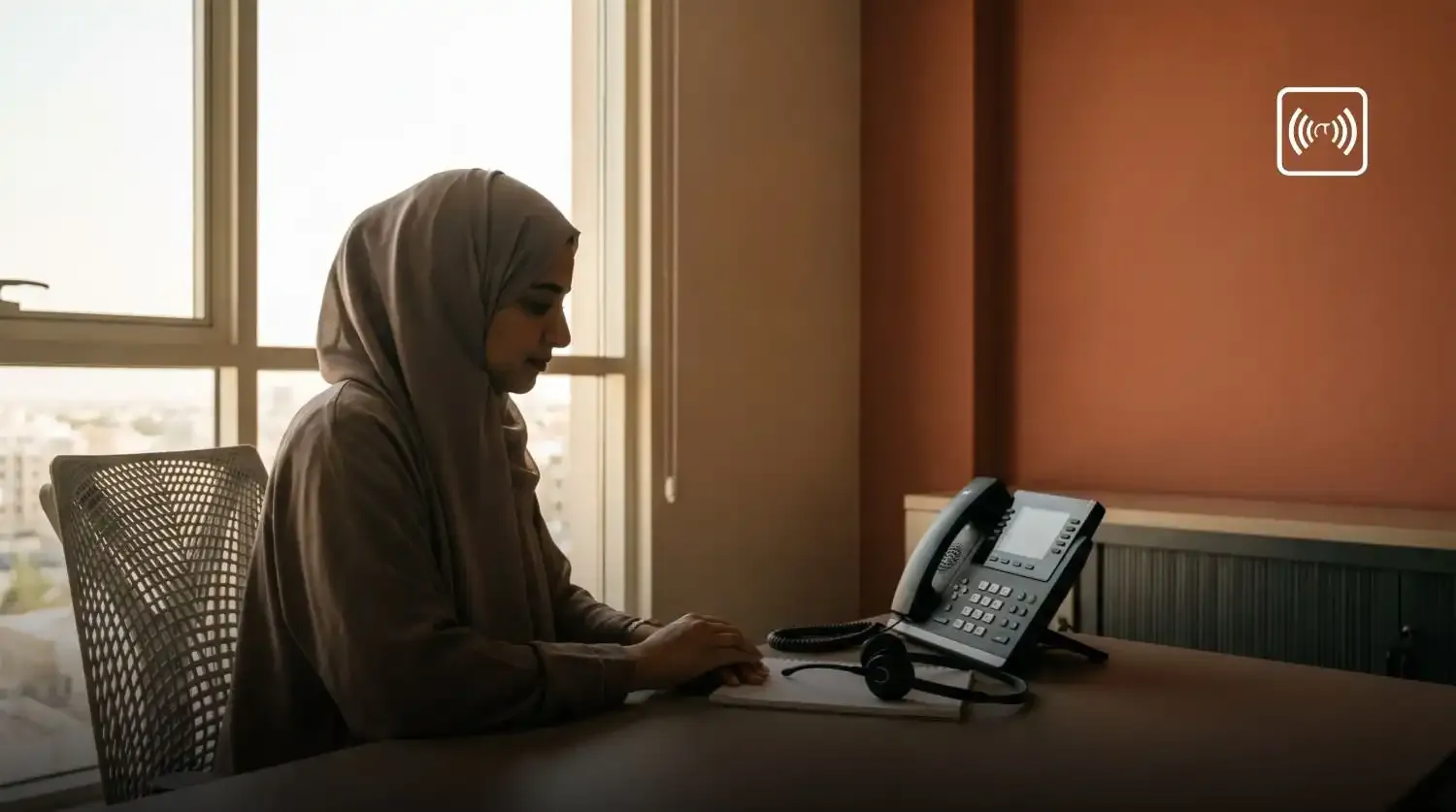
A business telephone system, commonly called a PBX (private branch exchange), links internal extensions to each other and to the public telephone network. Without one, each desk would need its own outside line, and nobody could pass a caller to a colleague without hanging up.
A well-configured PBX lets a receptionist move a caller to the right department in seconds. Colleagues dial each other with short internal numbers. A shared pool of outside lines means a busy afternoon does not leave callers hearing engaged tones. The system works as one coordinated service rather than a collection of separate phones.
Traditional PBX vs IP PBX
Most businesses today choose between two broad types. Knowing the difference will help you judge what vendors propose.
Traditional analog systems
Older systems rely on dedicated copper lines and hardware phones wired straight to a central unit. They are stable and simple, and many small offices ran on them for years without trouble. Their weakness is flexibility. Adding an extension, moving a desk to another floor or opening a branch usually involves new cabling, extra hardware and a visit from the installer.
IP-based (EPBX) systems
An IP PBX, often sold as an EPBX, runs over your data network instead of its own telephone wiring. Handsets plug into a network port, or staff use softphones on a laptop or smartphone. Adding a user is usually a configuration change. A branch can join the same system over a secure connection, so a team in Sohar and a team in Muscat can dial each other with the same short numbers.
The cost of that flexibility is dependence on your internet connection. An IP system is only as dependable as the network carrying it, so connectivity planning deserves as much attention as the phones. Businesses that expect to grow, or that already run more than one site, usually find an IP-based system easier to live with over the long term.
Features That Matter in Daily Use
Compare brands only after you have listed the features your team will use every day. A long specification sheet means little if most of it goes unused. These are the functions that most often justify their cost:
- Call routing and hunt groups: Ring a sales group in turn, so no call goes unanswered while one person is busy.
- Interactive voice response (IVR): Let callers pick a department by pressing a key. Menus in both Arabic and English suit most Omani customers, and a clear menu stops callers being passed from desk to desk.
- Voicemail to email: Staff away from their desks still receive messages, and nothing gets lost on a notepad.
- Call recording: Helpful for quality checks, staff coaching and settling disagreements about what was agreed on a call.
- Mobile extension: Sales staff, technicians and managers can take office calls on their phones while out of the office.
- Reports: Call volumes, missed calls and waiting times show where the process breaks down, so staffing and opening hours can follow evidence rather than guesswork.
Ask the vendor to demonstrate these features using a setup close to your own operation. A generic demo of a sample menu tells you much less than a walkthrough of how a call would travel through your real departments.
Connecting the Phone to Your Business Software
The phone system gets more valuable when it talks to the software you already use. When a call arrives, a screen pop-up showing the customer's record lets your team greet the caller by name and see their history at once. Logging calls against a CRM or ERP record also gives management a clear picture of sales activity, follow-up speed and response times.
Integration is not always part of the basic price. Some vendors charge separately for connectors, and some only support particular CRM or accounting packages. Ask early which software you use now, which you plan to adopt, and how each connection would be built and supported. If your business runs Odoo, confirm that the vendor has tested its connector against your version.
Planning for Oman's Business Setting
For multi-site businesses, connectivity matters before handsets do. A branch in Sohar or Salalah on a weak internet link will suffer dropped calls and poor audio, whatever phone system sits on top. Before buying, review each location for the following:
- The speed and stability of the internet connection, measured during busy hours rather than on a quiet morning
- A backup route, such as a second internet link or a mobile failover, so calls continue during an outage
- Whether one numbering plan can serve every branch, so internal dialling works between sites
- Power backup for the phone system and network equipment, since a phone system that dies with the electricity protects nobody
Telecom services and number allocation in Oman are regulated, and the rules that apply to you depend on the service and the numbers involved. The Telecommunications Regulatory Authority publishes licensing information and regulations on its official website at tra.gov.om. Confirm licensing and number requirements with your provider before installation, and keep the paperwork on file.
Seasonal patterns also shape call volumes. A retail business may see a spike around national holidays and major sales periods, while a service company often peaks early in the working week. Share these patterns with your vendor during planning so the system is sized for real peaks rather than average days.
A Note on Dubai
If your business also serves Dubai or has an office there, the same principles hold. Multi-site routing, CRM integration and backup connectivity matter just as much on that side of the border. Dubai is also a secondary market for many Omani companies, so a system that gives management one view across both countries can save considerable time.
Budget in OMR for Oman and AED for UAE installations, and request a separate quote from each market's provider rather than assuming one price covers both. Licensing, number allocation and support arrangements can differ between the two countries. Our UAE-side digital and software services are described at csloman.com.
Planning the Rollout
A phone system is easiest to install in stages. Start by recording your current lines, extensions and call paths: who answers which calls, where calls are lost and which departments handle the most traffic. Design the new call routes on paper before any hardware goes in. Staff training matters as much as the equipment. Brief receptionists and managers on the new menu, transfer steps and voicemail settings before go-live, and where downtime is unaffordable, keep the old system running for a short overlap. In the first month after go-live, review the reports every week to spot missed calls, long waits and calls transferred more than once.
Questions to Ask Before You Buy
A written proposal should answer these questions clearly. If a vendor avoids them, treat that as a warning sign.
- What is included: hardware, licences, installation, configuration and training?
- What are the support hours, and how quickly is a critical fault that stops calls answered?
- Who makes changes after go-live, how fast are they done, and what do additions cost?
- Can the system grow from ten extensions to fifty without replacing the core unit?
- What happens to calls during a power or internet outage, and how is the failover tested?
- Which software integrations are included, and which are charged separately?
- Can we see a live demonstration built around a business like ours?
- What is the hardware warranty, and who handles replacements?
Ask for references from businesses of similar size, and if you can, speak to one of them. A customer who has used the system for a year will tell you more than any brochure.
Talk to Our Team
A phone system is easier to choose once you know your call volumes, branch locations and team structure. Concept Technologies LLC designs and installs telephone (EPBX), networking and security solutions for businesses in Oman. Learn more about our services at ctechoman.com. Send us your requirements through the contact form or WhatsApp, and our sales team will arrange a site visit and a written proposal that answers the questions above.

Latest Projects